Why stadium bars and kiosks run out of stock on event day
You can have a full store and still go dry at the bar.
It happens in the same window every time: half-time, a change of ends, the gap between support and headline, the innings break. Queues build. A popular product runs out. The runner is already on the other side of the concourse. Someone tries the radio, then a text, then a walk to the store. By the time the case arrives, the rush has moved on, and the sale has gone with it.
For F&B and logistics leads at stadiums and major venues, this is rarely a purchasing failure. The stock was in the building. It just did not move in time.
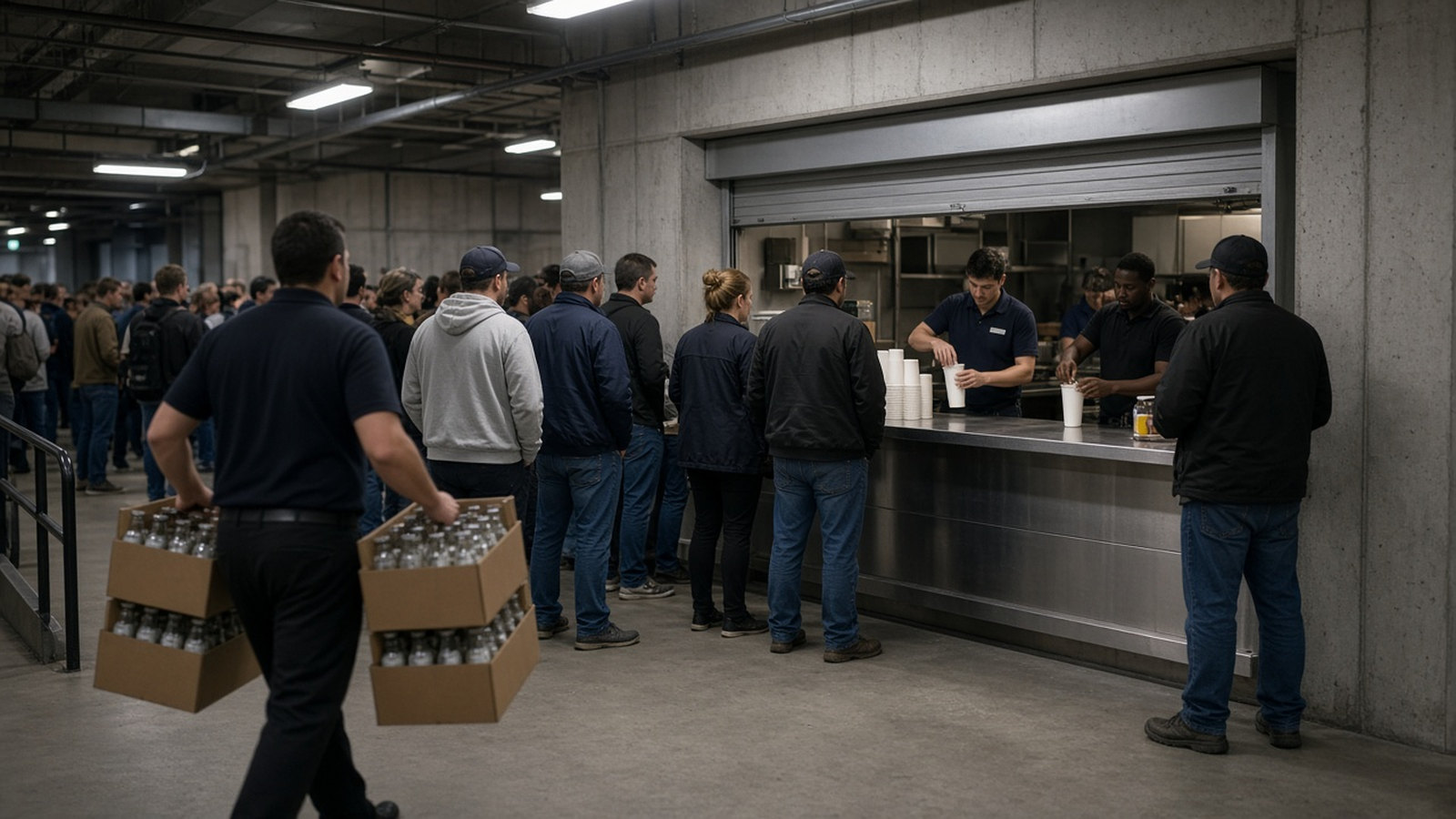
Stock-outs are usually a movement problem
Event-day inventory is not like a supermarket aisle. Demand does not arrive in a smooth line. It arrives in waves, concentrated at a handful of outlets, for a short list of products, in a window that may last only a few minutes.
Par levels and delivery schedules matter, but they are decided before gates open. Once the event is live, the job is different: see what is running low, get approval to move it, get it to the right stand, and record what happened so the next count is still true.
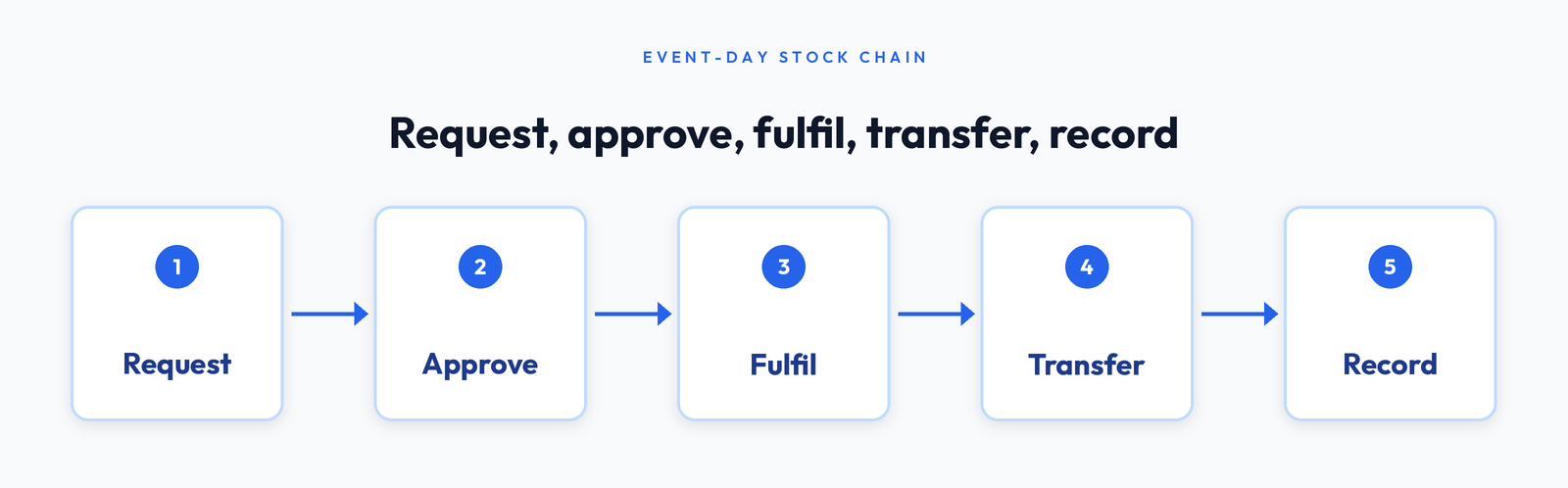
When that chain breaks, the outward symptom is a stock-out. The cause is usually one of the operational gaps below.
Demand arrives in waves, not in a steady line
Most venue teams already know their rush windows. What is harder is acting on them in the moment.
A bar that was comfortable twenty minutes ago can be emptied by a single break in play. A kiosk that looks quiet from the event desk can be three deep on the concourse. If replenishment is planned against an average hour, it will be late for the peak that actually sells the product.
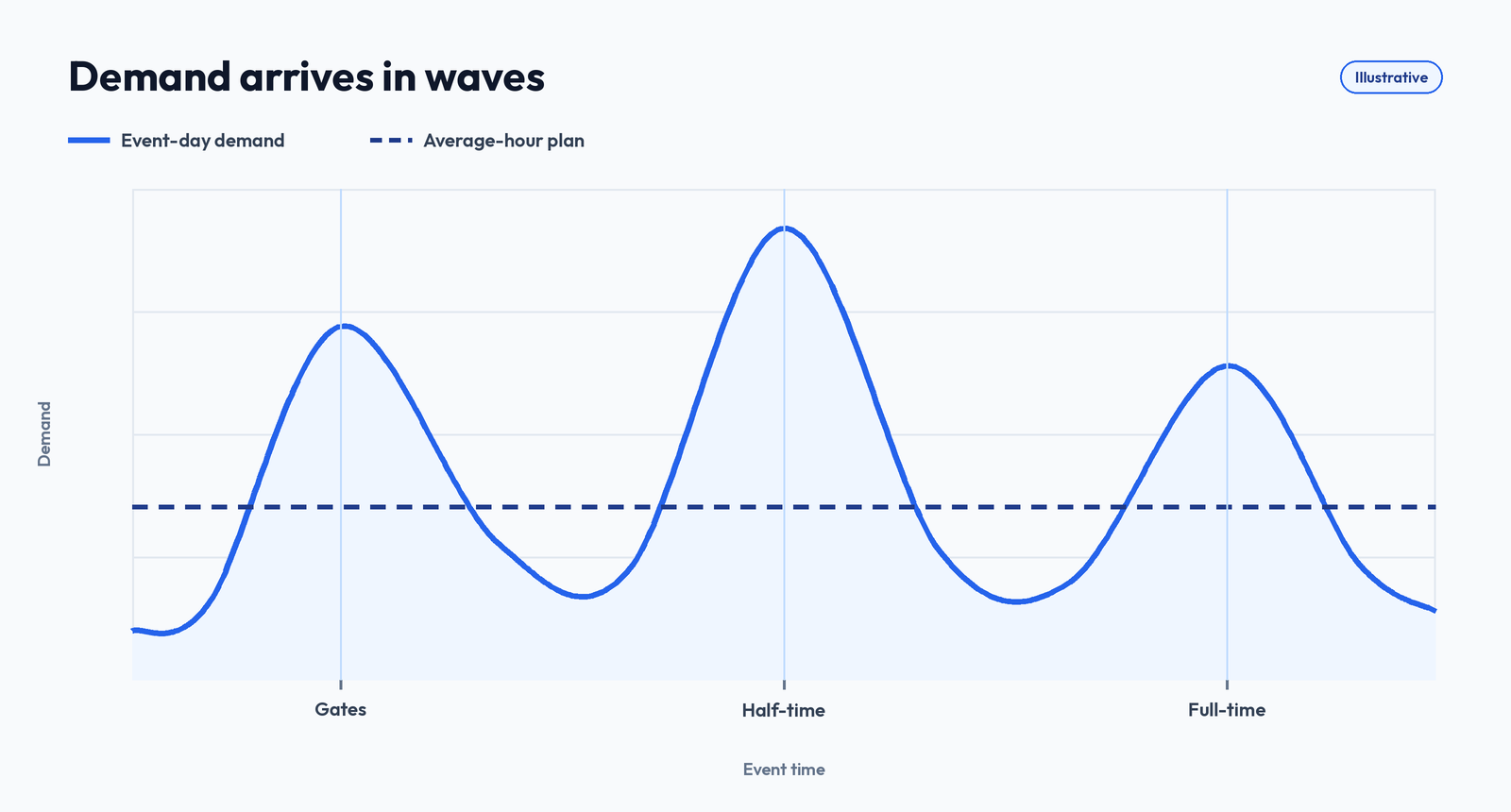
The practical habit is to pre-position for the known waves — extra cases at the stands that historically take the first surge — and to treat "we're getting low" as a request that has to move before the queue forms, not after the fridge is empty.
Agree, before gates open, what "low" means for the products that sell hardest in a rush. A trigger that only fires when the last unit has gone is a trigger that arrives too late.
The stock is often already in the building
A dry bar does not always mean the venue is short. Another stand may have surplus. The commissary may have the case sitting on a pallet. A neighbouring kiosk may have over-picked that morning.
The problem is visibility and permission. If the only way to find spare stock is to ring around, walk the concourse, or wait for someone to notice, the window closes. Informal borrowing — "just grab two cases from stand 12" — can plug the gap once, then leave both outlets with counts that no longer match what is on the shelf.
Treat transfers as real work: what moved, from where, to where, how many, and who did it. That is how a save during the event does not become a reconciliation mess after it.
Requests get lost between radios, spreadsheets and paper
Radios are fast until the channel is congested. Paper dockets are clear until they sit in a pocket. A shared spreadsheet is useful in the office and awkward on a concourse, mid-rush.
None of these tools is foolish. They fail in combination. A request is called in, half-heard, written down twice, or overtaken by the next shout. The store picks the wrong product. The runner arrives at a stand that has already borrowed from next door. Nobody can later say which version was the real request.
Give every outlet a single place to raise a stock request that does not depend on catching the right person at the right second. The request should carry the outlet, the product, the quantity and the urgency, and it should still be there when the event desk looks up from the last call. Use the same product names the store will pick from, not a nickname shouted over the radio.
Approvals and runners need a queue, not a shout
In many venues, the person who can approve a transfer is also the person already on the floor. A runner who does not have a clear list will service the loudest request, not the most urgent one.
Make approvals explicit and visible. The event desk, the approver and the runner should be looking at the same list: what is waiting, what is approved, what is in transit, and what is done. Put the next job in front of the runner rather than hoping they heard it. When two stands need the same product, the priority should be a decision, not an argument in a stairwell.
If it isn't recorded in the moment, the next event starts wrong
Wastage, completions and last-minute transfers that are "written up in the morning" are the ones that disappear. The till is closed, the crew has gone, and the stock sheet is a reconstruction.
That reconstruction is painful, and it is also how the next event inherits a bad opening count. A stand that looks fully stocked on paper and light in the fridge will stock out earlier than the plan assumed.
Record the movement when it happens: request, approval, fulfilment, transfer, wastage. The post-event report should be a reading of the same record, not a second project.
A simple event-day checklist
You do not need a new operating model to get tighter. You need the chain to hold under pressure:
- Pre-position for known rush windows, not for the average hour.
- Agree the "getting low" trigger for key products before gates open.
- Let every stand raise a request without relying on the radio alone.
- Keep approvals in one visible queue, with a clear owner.
- Give runners a single list of approved jobs, in priority order.
- Treat outlet-to-outlet transfers as first-class movements, fully recorded.
- Log wastage and completions during the event, not the morning after.
- Reconcile from the live record, so the next event starts from a count you trust.
This is the problem LVIE is built for
LVIE — the Live Venue Intelligence Engine — gives stadiums and major venues one live workflow for event-day stock requests, approvals, fulfilment and transfers.
The event desk works from a web portal. Approvers and runners work from an iOS or Android app. A request can be approved, fulfilled and recorded in the same thread, including outlet transfers and wastage, with staff roles and push notifications so the next job does not depend on a radio call.
The aim is straightforward. Keep stock moving. Keep venues selling.